
One of the most common questions we hear from Dubai homeowners and tenants is simple: how many coats of paint does a wall actually need? The honest answer is that it depends on the wall, the old colour, the paint and the finish you want. This guide explains how to think about coats so you can judge a quote sensibly and avoid paying for work you do not need, or accepting a patchy result.
The short answer: usually a primer or sealer plus two finish coats
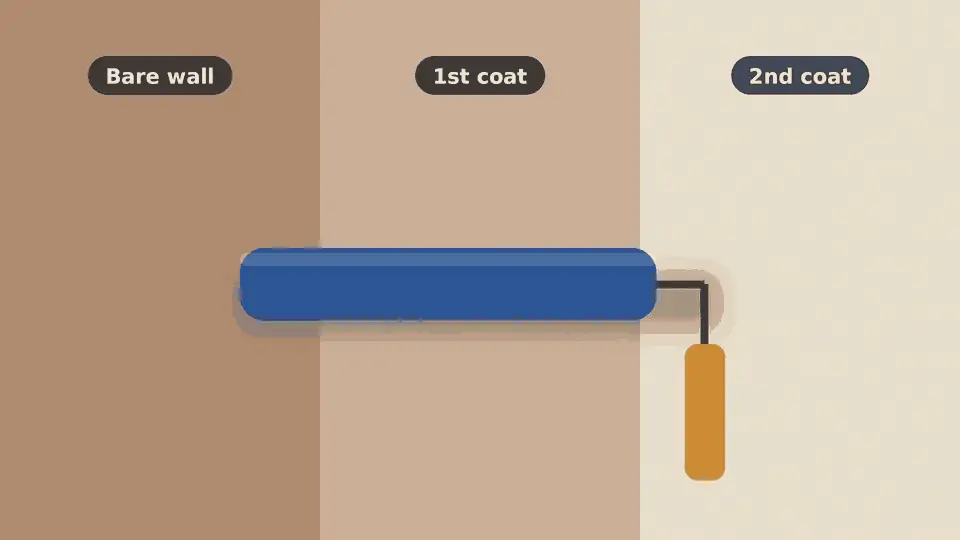
For most interior walls in good condition, a typical system is one preparation step (a primer, sealer or spot-priming) followed by two coats of finish paint. Two finish coats give an even colour, better coverage and a more durable film than a single thick coat. Some paints are marketed as one-coat products, but the real result still depends on the surface and colour change, so ask the painter to confirm what they plan to use and why.
What changes the number of coats
Colour change
Going from a light colour to another light colour is usually easy. Covering a dark or strong colour with a pale one often needs a primer and extra finish coats. Moving to a deep colour can also need more coats, because deep shades may need a tinted undercoat to look even.
Condition of the surface
Fresh plaster, patched cracks and previously unpainted areas soak up paint unevenly. These surfaces normally need a sealer or primer first. Glossy or oil-based old paint may need sanding and a suitable bonding primer so new paint grips properly.
Paint quality and finish
Better-quality paints often cover more evenly, but no paint removes the need for good preparation. Matt finishes hide wall imperfections more than glossy ones, while higher-sheen finishes usually show roller marks and patches more clearly, so they can be less forgiving.
Light and room use
Bright Dubai sunlight through large windows can reveal thin spots and uneven areas that look fine in the evening. Kitchens, bathrooms and busy family rooms may also benefit from a more washable, more protective system. Our guide to the checklist for choosing a painting contractor includes questions worth asking about products and coats.
Why one coat is rarely enough
A single coat can look acceptable while wet, then dry patchy: you may see lighter areas over filler, darker areas over bare plaster, or roller overlaps. A second coat usually evens these out. It also builds the paint film, which helps the finish resist marks and cleaning. If a quote promises a full repaint in one coat on a colour change, it is fair to ask how the painter will make sure the colour looks uniform.
When three coats or extra steps make sense
Some situations genuinely need more than the standard system: covering a very dark wall with a light colour, stain-blocking water marks or smoke stains, repairing damaged areas, or painting over bare plaster or new skim coat. Water stains and mould should be dealt with at the cause first, because paint alone will not fix a damp problem. In these cases a good painter should explain the extra primer or coat and where it applies, rather than adding it to every wall.
Practical checklist before you approve the work
- Ask how many coats are included for each area, and whether primer or sealer is separate from the finish coats.
- Ask which paint brand and finish will be used, and for which rooms.
- Confirm how cracks, holes and old stains will be repaired before painting.
- Tell the painter if you are changing from a dark colour to a light one so it can be priced properly.
- Check the drying time between coats so the schedule is realistic.
- Ask for a small test patch if you are unsure about a colour in your own light.
- Confirm whether ceilings, doors and skirtings are included.
Preparation is as important as the coats themselves. Our guide to what affects villa painting cost in Dubai explains how preparation, access and scope can change a quote far more than the paint alone.
How coats affect your timeline and budget
Each coat needs time to dry properly before the next one is applied, so a two-coat system with preparation takes longer than a quick single pass. That is normal, and rushing the drying time can cause marks and poor adhesion. For a larger property, ask for the schedule room by room. If you are planning a full repaint, look at our villa painting services, and for smaller homes our apartment painting service. You can also see the areas we cover on our locations page.
Frequently asked questions
Can I paint just one coat if the wall is already white?
Sometimes a single coat can refresh a clean wall in the same colour, but patches and repairs usually still need extra attention. A painter should check the wall in daylight before agreeing to a lighter system.
Is a primer coat counted as a paint coat?
Primer is a separate preparation layer and is not a substitute for finish coats. Always ask whether a quote includes primer in addition to the finish coats.
Do ceilings need the same number of coats as walls?
Not always. Ceilings in good condition often need fewer steps, but stained, patched or yellowed ceilings may need sealing and more than one finish coat. It is best to have them inspected.
Get a clear coat-by-coat quote
If you want a quote that spells out preparation, primer and finish coats for every room, speak to Dubai Paint Guru. Call or WhatsApp us on +971 56 836 1723 (WhatsApp), or send your details through our contact page and we will help you plan the right system for your home.